
Brucellosis Vaccines Market Trends, Size & Growth by 2034
Coverage: By Product (DNA Vaccines, Subunit Vaccines, Vector Vaccines, B. Abortus Recombinant Mutants, Others); Application (Cattle, Sheep, Pigs, Others); End User (Veterinary Hospitals, Veterinary Clinics, Animal Care Centers) , and Geography (North America, Europe, Asia Pacific, and South and Central America)
- Status : Data Released
- Report Code : TIPRE00008665
- Category : Life Sciences
- No. of Pages : 150
- Available Report Formats :


- Last update date : August 10, 2026


2025 Market Size
US$ 270.95 Mn
Base year value
2034 Forecast
US$ 356.51 Mn
Projected by 2034
CAGR 2026-2034
3.10 %
Growth rate
Addressable Market
US$ 2,849.53 Mn
(2026-2034)
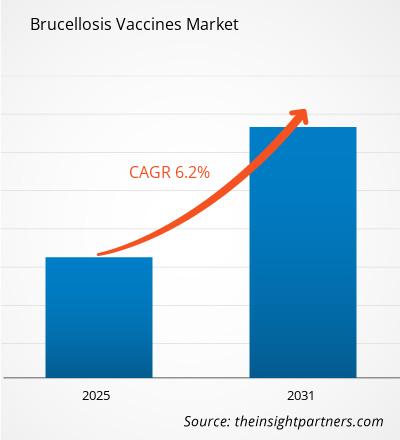
The Brucellosis Vaccines Market size is expected to go up from US$ 270.95 Million in 2025 to US$ 356.51 Million by 2034 at a CAGR of 3.10% for 2026–2034. Brucellosis is a productivity-limiting zoonotic disease causing abortions, infertility, milk loss, and human exposure in cattle and small ruminants in endemic regions, leading to the ongoing demand for livestock preventive healthcare solutions.
In North America, the Brucellosis Vaccines Market depends on the herd surveillance and disease control policies of each state, as well as the availability of veterinarians in cattle-rich states. It is expected to register a CAGR of 2.6–3.0% from 2026 to 2034 due to regulations, veterinary network, and demand for vaccines compatible with diagnostic-based disease management without disrupting movement and documentation.
Brucellosis Vaccines Market Assessment and Insights
- North America accounted for 34–38% share in 2025 and is projected to grow at a CAGR of 2.6–3.0% between 2026–2034, supported by regulated herd programs, veterinary compliance, and cattle-focused disease monitoring.
- US represented 70–74% of North America in 2025 and is expected to grow at a CAGR of 2.5–2.9% between 2026–2034, driven by accredited vaccination and surveillance protocols.
- Europe held 25–29% share in 2025 and is projected to grow at a CAGR of 2.4–2.8% between 2026–2034, led by Spain, France, Italy, and Germany through coordinated veterinary biosecurity systems.
- Asia Pacific accounted for 22–26% share in 2025 and is expected to expand at a CAGR of 3.8–4.4% between 2026–2034, led by China, India, Australia, and Japan through dairy modernization.
- Largest Segment Cattle held 58–62% market share in 2025 and is projected to grow at a CAGR of 2.8–3.2% between 2026–2034 due to bovine vaccination mandates.
- High Growth Segment B. Abortus Recombinant Mutants held 18–22% market share in 2025 and is expected to grow at a CAGR of 4.2–4.8% between 2026–2034 due to DIVA-compatible research priorities.
- Key companies analyzed in detail: Boehringer Ingelheim International GmbH, Merck & Co., Inc., Bayer AG, Ceva Sante Animale, CZ Vaccines S.A.U., Zoetis Inc., Biogenesis Bago S.A., Indian Immunologicals Limited, Elanco Animal Health Incorporated, Heska Corporation.
Source: The Insight Partners' analysis based on proprietary research, government publications, company annual reports, investor presentations, industry databases, and expert interviews.
The Brucellosis Vaccines Market has shifted away from extensive utilization of conventional vaccines towards safer and better characterized vaccine delivery systems that facilitate field efficacy, diagnostics compatibility and disease control programs. Vaccine production dynamics have also changed due to improvements in cold chain stability, lyophilized production and increased batch consistency by producers. Growing emphasis on disease control in line with WOAH guidelines, national cattle vaccination campaigns and awareness about zoonotic risks have driven the need for quality assured veterinary biologicals.
Going forward, new market opportunities will arise from the development of dairy industries, public procurement schemes and regulation of cross border animal movements. Future investments will be made in recombinant, vectored and subunit vaccine types which overcome serological interference. The regulatory winds will favor One Health approaches, food security initiatives and the safeguarding of animal protein supply chain from reproductive loss risks.
Brucellosis Vaccines Market Report Scope
| Report Attribute | Details |
|---|---|
| Market size in 2025 | US$ 270.95 Million |
| Market Size by 2034 | US$ 356.51 Million |
| Global CAGR (2026 - 2034) | 3.10% |
| Historical Data | 2021-2024 |
| Forecast period | 2026-2034 |
Brucellosis Vaccines Market Analysis
The market growth is driven by herd economics, reduced zoonotic threat, and lack of effective curative solution in livestock. The market demand will be high in areas where there is dairy development, and there are movements that expose the livestock to infection. Veterinary hospitals, clinics, and animal care centers help in achieving last mile through a combination of vaccination, screening, record keeping, and certification.
The supply will be dependent on the quality of the antigens, expertise in working with live organisms, and proper distribution under cold chain condition. Companies having knowledge on production of biologics have an advantage since brucellosis vaccines require tight control of strains and potency as well as adherence to biosafety guidelines. Public tenders and institutional purchases still play a significant role, but there is emerging influence from private dairy cooperatives.
The Competitive Analysis reveals a competitive landscape dominated by diversified animal health firms and specialized vaccine makers. Among them are such firms as Merck & Co., Inc., Zoetis Inc., Ceva Sante Animale, and Boehringer Ingelheim International GmbH, which possess technical capabilities and livestock sales capabilities. CZ Vaccines S.A.U., Biogenesis Bago S.A., and Indian Immunologicals Limited have advantages in regional manufacturing and programs.
Positioning is being increasingly built not just around dosage capability but platform capabilities. There is an ongoing trend for investment in DIVA-compliant vaccines, recombinants, and genomics-driven antigen selection. Such firms as Elanco Animal Health Incorporated, Bayer AG, and Heska Corporation can contribute additional capabilities in the veterinary sales channels and diagnostics.
● REPORT CUSTOMIZATION
Tailor This Report To Align With Your Specific Business Requirements
This report can be customized to align precisely with your business objectives, scope, and target markets. Customization options include tailored segmentation, geography, competitive analysis, and strategic insights to support informed decision-making.
Customize This Report →WHAT YOU CAN ADJUST
- ● Segmentations
- ● Geography
- ● Competitive Analysis
- ● Language Preferences
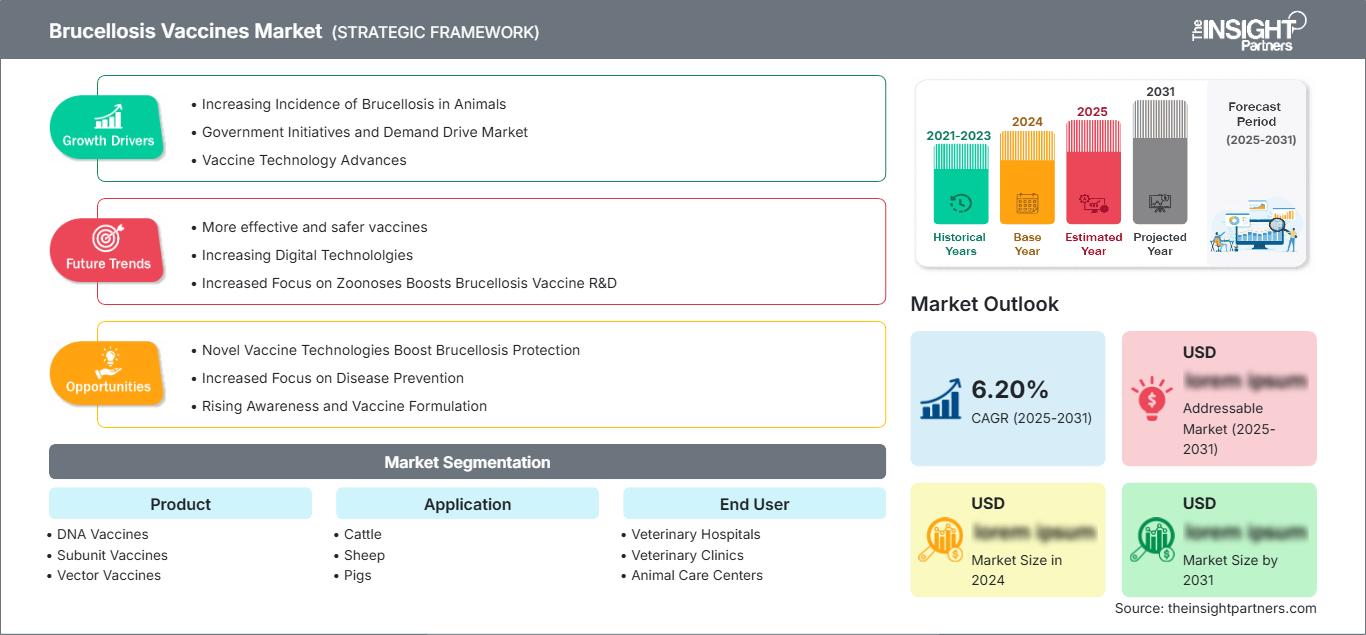
Brucellosis Vaccines Market: Strategic Insights
Regional Insights
North America Brucellosis Vaccines Market
The market share in North America was estimated to be around 34%–38% of the total global demand in 2025 and was forecasted to grow at a CAGR of 2.6%–3.0% over the period 2026-2034. The Brucellosis Vaccines Market share in the North America region is indicative of the mature animal healthcare system, the presence of qualified veterinarians, state monitoring, and high cattle traceability.
Additionally, Canada and Mexico bring their own unique aspects to the table with respect to disease surveillance and control, import restrictions, and management of herds in a trade-oriented manner. Although there have been several programs for eradicating the infection from several regions, there remains the problem of wild animal hosts and cross-border movement of livestock which keeps the preventive demand alive.
U.S. Brucellosis Vaccines Market
In 2025, the U.S. represented 70–74% of North America and is forecasted to grow at a rate of CAGR of 2.5–2.9% from 2026 to 2034. The demand will be driven by protocols of APHIS for managing brucellosis in livestock through vaccination and monitoring in risk areas. Veterinary clinics and hospitals are essential since vaccination records need to be kept accurately for interstate transfer of herds.
Companies operate in wide range of markets, including Merck & Co., Inc., Zoetis Inc., Boehringer Ingelheim International GmbH, Elanco Animal Health Incorporated, and Heska Corporation in sectors of livestock health, diagnostics, and veterinary services. In terms of application, there will be preference for cattle rather than swine and sheep because of the size of bovine industry, regular calf vaccination, and economic impact on reproduction in dairy and cow-calf herds.
Europe Brucellosis Vaccines Market
Europe’s contribution to the market was estimated at 25-29% in 2025 and is forecasted to record a CAGR of 2.4-2.8% within 2026-2034. Leading country in this region is Spain thanks to specialist vaccine manufacturing, specific knowledge in ruminant disease management, and better linkage of eradication policies to biologics supply. France also has its share in terms of veterinary research potential, livestock health management, and multinationals’ vaccine manufacturing facilities.
As for UK and Germany, these countries concentrate on surveillance and import regulations along with veterinary compliance instead of general vaccination of low prevalence areas. Their demand is very specific and depends on risk assessment, livestock transportation, and research-led application of new vaccine platforms that provide better traceability and diagnostics. Differentiation of vaccinated from infected animals is also essential for these markets in terms of biologics quality.
Demand in France, Italy, and Spain comes from the need in small ruminants and cattle disease control, particularly in regions practicing transhumance or having mixed farming and trade exposures. Italy and Spain are important countries regarding sheep and cattle vaccination strategies while France contributes to the development of innovations due to animal health R&D.
APAC Brucellosis Vaccines Market
Asia Pacific held 22–26% share in 2025 and is projected to grow at a CAGR of 3.8–4.4% during 2026–2034, making it the fastest regional cluster. China and India lead demand due to large cattle, buffalo, sheep, and goat populations, expanding dairy networks, and public disease control initiatives.
Japan, South Korea, and Australia contribute through premium veterinary standards, surveillance discipline, and livestock trade safeguards. India’s calf vaccination under national disease control programs is a major growth reference, while China’s scale supports institutional procurement. The region’s industrial drivers include dairy consolidation, cold-chain investments, and policy emphasis on zoonotic disease prevention.
Middle East & Africa Brucellosis Vaccines Market
Middle East & Africa is projected to grow at a CAGR of 3.2–3.8% during 2026–2034, with Saudi Arabia leading demand due to organized livestock imports, food security investment, and ruminant health programs. The UAE emphasizes biosecurity for imported animals, while South Africa supports structured veterinary services and surveillance.
Rest of MEA shows gradual adoption as pastoral systems, small ruminant density, and animal movement increase exposure risk. Energy-linked infrastructure investment indirectly supports vaccine distribution by improving cold-chain logistics, road access, and veterinary outreach. Demand is expected to remain program-led rather than purely commercial in lower-income livestock systems.
Segmentation Analysis
Product
The Product segment is projected to grow at a CAGR of 3.0–3.5% during 2026–2034. The Brucellosis Vaccines Market scope across products is widening as manufacturers evaluate DNA vaccines, subunit vaccines, vector vaccines, and B. Abortus recombinant mutants for better safety, immunogenicity, and diagnostic compatibility. Adoption will depend on regulatory confidence, field protection data, ease of administration, and suitability for large public vaccination programs.
- DNA Vaccines are positioned as next-generation candidates for targeted immune response, lower pathogen-handling risk, and flexible antigen design, but broader uptake depends on field validation and regulatory acceptance.
- Subunit Vaccines support safer development pathways because they avoid whole live organisms, making them strategically important for programs that prioritize biosafety, stability, and reduced diagnostic interference.
- Vector Vaccines offer potential for strong cellular immunity and platform adaptability, especially where research priorities focus on durable protection across livestock species and efficient scalable manufacturing.
- B. Abortus Recombinant Mutants are strategically important for cattle-focused control because they may improve DIVA compatibility, retain protective immune response, and reduce limitations linked to older vaccine strains.
Application
The Application segment is projected to grow at a CAGR of 2.9–3.4% during 2026–2034. Cattle remain the primary application because bovine brucellosis directly affects dairy productivity, calf output, herd fertility, and trade documentation. Sheep and pigs contribute smaller but important demand pools, particularly in endemic regions where mixed farming and small ruminant movement complicate eradication.
- Cattle dominate demand due to structured calf vaccination, dairy productivity protection, and regulatory monitoring tied to herd movement, milk supply security, and reproductive loss prevention.
- Sheep represent a significant endemic-market application because brucellosis affects flock reproduction, public health exposure, and transhumance systems where animal movement complicates sustained surveillance.
- Pigs have narrower commercial use but remain relevant in regions where porcine brucellosis surveillance, breeding herd protection, and occupational exposure risks support targeted vaccination strategies.
End User
The End User segment is projected to grow at a CAGR of 3.1–3.6% during 2026–2034. Veterinary hospitals, veterinary clinics, and animal care centers influence vaccine adoption by linking immunization with diagnostics, herd records, owner education, and adverse event monitoring. Clinics are especially important in decentralized livestock economies because they connect manufacturers, government programs, and farmers.
- Veterinary Hospitals handle complex herd health decisions, diagnostic confirmation, and high-value livestock cases, making them important for protocol-led vaccination and adverse reaction management.
- Veterinary Clinics provide the widest access point for routine livestock vaccination, documentation, and farmer education, particularly in cattle and small ruminant communities outside major urban centers.
- Animal Care Centers are gaining relevance where public programs, shelters, cooperative farms, and community livestock services require accessible vaccination support and field-level disease prevention.
Opportunity Snapshot
| Segment Name | Revenue Contribution | Trend Tag | Adoption Stage |
| Cattle | High | Calf Programs | Mature |
| Sheep | Medium | Flock Control | Scaling |
| Pigs | Low | Breeding Herds | Emerging |
Brucellosis Vaccines Market Growth Drivers and Impact Analysis
Government-Led Zoonotic Disease Control Programs
Public vaccination programs are a core driver because brucellosis affects animal productivity and human health through occupational exposure and unpasteurized dairy consumption. National initiatives that target defined age cohorts, especially bovine female calves, create predictable demand and improve vaccination compliance. The real-world impact is visible in procurement stability, veterinary workforce mobilization, and better alignment between testing and vaccination schedules. The Brucellosis Vaccines Market benefits when ministries integrate animal disease control with food safety, export readiness, and rural income protection. Programmatic demand also reduces access gaps in smallholder regions, where individual farmers may otherwise delay preventive care due to limited awareness or affordability.
Rising Dairy Productivity and Reproductive Loss Awareness
Dairy producers increasingly recognize that brucellosis prevention protects breeding efficiency, milk output, calf survival, and long-term herd value. Abortion storms, retained placenta, infertility, and interrupted lactation create measurable farm-level losses, making vaccination economically relevant beyond regulatory compliance. The impact is strongest in cattle-intensive economies where herd expansion, artificial insemination, and cooperative milk collection increase the need for disease-free certification. Veterinary clinics are using productivity messages to improve adoption among small and medium farms. This driver supports demand for vaccines that are reliable, easy to administer, and compatible with herd health calendars.
Advances in Recombinant and Diagnostic-Compatible Platforms
Next-generation vaccine research is driving market confidence because conventional products can generate persistent serological responses that complicate surveillance. Recombinant mutants, subunit technologies, DNA platforms, and vector candidates are being evaluated to improve safety, reduce interference, and support DIVA strategies. This creates commercial impact by expanding the addressable base from routine vaccination toward eradication-compatible programs. Manufacturers that can combine field efficacy with diagnostic clarity are likely to gain preference in public tenders and premium livestock systems. The shift also encourages collaborations among research institutes, biologics producers, and veterinary authorities.
Brucellosis Vaccines Market Future Trends
Platform Shift Toward DIVA-Compatible Vaccines
The most important Brucellosis Vaccines Market trends will center on vaccines that allow differentiation between infected and vaccinated animals. This direction is critical because eradication programs require confidence in serological interpretation, especially in regions moving from control to elimination. DIVA-compatible recombinant mutants and subunit approaches are expected to gain attention as governments seek stronger surveillance accuracy without weakening herd protection. Over the forecast period, manufacturers will likely invest in paired vaccine-diagnostic ecosystems, where product value is measured by both immune protection and compatibility with official testing workflows.
Regionalization of Vaccine Manufacturing and Supply Security
Vaccine supply chains are expected to become more regional as governments prioritize biological security, faster procurement, and lower dependency on long-distance imports. Regional manufacturing can reduce lead times, improve cold-chain reliability, and allow strain or formulation adjustments suited to local epidemiology. This trend will be especially relevant in Asia Pacific, Latin America, and parts of Africa, where livestock density and disease burden support localized production economics. Partnerships between global animal health firms and domestic biologics manufacturers may become more common as countries link veterinary vaccine capacity with food security planning.
Brucellosis Vaccines Market Opportunities
Integrated Vaccination and Surveillance Service Models
A strong opportunity lies in bundling vaccination with diagnostics, digital records, herd risk scoring, and compliance documentation. Brucellosis Vaccines Market Forecasts indicate that buyers will increasingly value complete disease control solutions over single-dose procurement. Veterinary clinics and hospitals can become service hubs that help farmers plan age-specific vaccination, monitor adverse events, and maintain records for animal movement or milk cooperative enrollment. Manufacturers can support this model through training, mobile tools, and partnerships with laboratories. This approach increases adherence, improves disease visibility, and creates recurring engagement with livestock producers.
Expansion in Smallholder Dairy and Mixed Farming Systems
Smallholder livestock systems represent an underpenetrated opportunity because disease burden is often high while access to quality vaccination remains uneven. Companies and public agencies can improve uptake by offering smaller pack sizes, thermostability improvements, and community-level vaccination campaigns. Mixed cattle, sheep, and goat farms require education that explains species-specific risk and safe handling practices. Commercial success will depend on affordability, trusted local distributors, and integration with government disease control calendars. Over time, better access in these systems can reduce zoonotic transmission, protect rural income, and support higher-quality dairy and meat supply.
Recent Developments
- December 2025: Merck & Co., Inc. announced the availability of Circumvent CL, a ready-to-use swine vaccine designed to protect pigs against Porcine Circovirus Types 2a and 2d and Lawsonia intracellularis, strengthening its livestock biologics portfolio and reinforcing its focus on simplified vaccination workflows for commercial producers.
- November 2025: Ceva Sante Animale supported a collaborative initiative with Singapore’s National Parks Board and Mandai Wildlife Group to strengthen preparedness against avian influenza, reflecting the company’s broader prevention-led animal health strategy and its continued investment in vaccination, surveillance, and One Health response capacity.
- February 2025: Ceva Sante Animale inaugurated Biogenovac, a genomics research laboratory in France focused on future animal vaccines, high-throughput sequencing, and bioinformatics-enabled antigen analysis, expanding its technical platform for emerging infectious diseases and strengthening capabilities relevant to next-generation veterinary vaccine development.
Frequently Asked Questions

- Comprehensive Market Sizing and Forecast Analysis
- Detailed Segmentation Analysis
- In-Depth Market Dynamics Assessment
- Regional and Country-Level Insights
- Competitive Landscape and Company Benchmarking
- Strategic Business Intelligence
Recent Reports
Testimonials

The Insight Partners' SCADA System Market report is comprehensive, with valuable insights on current trends and future forecasts. The team was highly professional, responsive, and supportive throughout. We are very satisfied and highly recommend their services.
RAN KEDEM Partner, Reali Technologies LTDs
I requested a report on a very specific software market and the team produced the report in a few days. The information was very relevant and well presented. I then requested some changes and additions to the report. The team was again very responsive and I got the final report in less than a week.
JEAN-HERVE JENN Chairman, Future Analytica
We worked with The Insight Partners for an important market study and forecast. They gave us clear insights into opportunities and risks, which helped shape our plans. Their research was easy to use and based on solid data. It helped us make smart, confident decisions. We highly recommend them.
PIYUSH NAGPAL Sr. Vice President, High Beam Global
The Insight Partners delivered insightful, well-structured market research with strong domain expertise. Their team was professional and responsive throughout. The user-friendly website made accessing industry reports seamless. We highly recommend them for reliable, high-quality research services
YUKIHIKO ADACHI CEO, Deep Blue, LLC.
This is the first time I have purchased a market report from The Insight Partners.While I was unsure at first, I visited their web site and felt more comfortable to take the risk and purchase a market report.I am completely satisfied with the quality of the report and customer service. I had several questions and comments with the initial report, but after a couple of dialogs over email with their analyst I believe I have a report that I can use as input to our strategic planning process.Thank you so much for taking the extra time and making this a positive experience.I will definitely recommend your service to others and you will be my first call when we need further market data.
JOHN SUZUKI President and Chief Executive Officer, Board Director, BK Technologies
I wish to appreciate your support and the professionalism you displayed in the course of attending to my request for information regarding to infectious disease IVD market in Nigeria. I appreciate your patience, your guidance, and the fact that you were willing to offer a discount, which eventually made it possible for us to close a deal. I look forward to engaging The Insight Partners in the future, all thanks to the impression you have created in me as a result of this first encounter.
DR CHIJIOKE ONYIA MANAGING DIRECTOR, PineCrest Healthcare Ltd.Reason to Buy
- Informed Decision-Making
- Understanding Market Dynamics
- Competitive Analysis
- Identifying Emerging Markets
- Customer Insights
- Market Forecasts
- Risk Mitigation
- Boosting Operational Efficiency
- Strategic Planning
- Investment Justification
- Tracking Industry Innovations
- Aligning with Regulatory Trends





 Get Free Sample for