
Cardiac Surgery Instruments Market Share, Growth & Forecast by 2034
Coverage: by Product (Needle Holders, Forceps, Clamps, Scissors and Others), Type (Bypass Surgery, Heart Valve Surgery, Pediatric Surgery and Others), End User (Hospitals, Ambulatory Surgical Centers, Diagnostic Centers and Cardiac Centers) , and Geography (North America, Europe, Asia Pacific, and South and Central America)
- Status : Data Released
- Report Code : TIPRE00003097
- Category : Life Sciences
- No. of Pages : 150
- Available Report Formats :


- Last update date : September 08, 2026


2025 Market Size
US$ 3.16 Bn
Base year value
2034 Forecast
US$ 5.85 Bn
Projected by 2034
CAGR 2026-2034
7.08 %
Growth rate
Addressable Market
US$ 40.67 Bn
(2026-2034)
The Cardiac Surgery Instruments Market was valued at US$ 3.16 Billion in 2025 and is projected to reach US$ 5.85 Billion by 2034. The market is expected to register a CAGR of 7.08% during 2026–2034, reflecting sustained demand for precision instruments used in bypass, valve, and pediatric cardiac procedures. Product replacement cycles and surgical capacity expansion will support revenue progression throughout the forecast period.
Within North America, the Cardiac Surgery Instruments Market size is estimated to expand at a CAGR of 6.6–7.0% during 2026–2034. Demand is supported by established cardiothoracic surgery networks, high adoption of minimally invasive techniques, and structured replacement of reusable instrument inventories. Purchasing decisions increasingly emphasize ergonomic design, sterilization compatibility, traceability, and standardized instrument sets that reduce preparation complexity across hospital systems.
Cardiac Surgery Instruments Market Assessment and Insights
- North America: The region accounted for 44–47% share in 2025 and is projected to record a 6.6–7.0% CAGR between 2026–2034, supported by advanced surgical infrastructure, instrument replacement programs, and minimally invasive cardiac surgery adoption.
- US: The country represented 86–89% of North American revenue in 2025 and is forecast to grow at a 6.7–7.1% CAGR between 2026–2034.
- Europe: Europe held a 25–28% share in 2025 and is expected to register a 6.2–6.7% CAGR between 2026–2034. Germany, the UK, France, Italy, and Spain remain important procurement markets.
- Asia Pacific: The region represented 20–23% of sales in 2025 and is forecast to grow at an 8.2–8.8% CAGR between 2026–2034, led by China, Japan, India, South Korea, and Australia.
- Largest Segment: Hospitals captured a 66–70% market share in 2025 and are projected to expand at a 6.8–7.2% CAGR between 2026–2034 because complex cardiac procedures require multidisciplinary inpatient infrastructure.
- High Growth Segment: Ambulatory surgical centers held a 13–16% market share in 2025 and are forecast to record an 8.1–8.7% CAGR between 2026–2034 as selected procedures migrate toward efficient outpatient environments.
- Key companies analyzed in detail: Becton, Dickinson and Company, Millennium Surgical Corp., Sklar Instruments, Inc., B. Braun SE, Teleflex Incorporated, Symmetry Surgical Inc., Scanlan International, Inc., Wexler Surgical, Inc., STILLE AB, and Surtex Instruments Limited.
Source: The Insight Partners' analysis based on proprietary research, government publications, company annual reports, investor presentations, industry databases, and expert interviews.
Cardiac instrument design has progressed from standard stainless steel sets into specialized procedure-related instrument sets with atraumatic jaws, small working tips, light materials, and ergonomic handles. There is increasing use of precise machining and surface treatment to improve alignment, corrosion resistance, and consistent performance. Cardiac instrument manufacturing continues to be very quality-intensive, as there are repeated sterilizations involved for the instruments that have to retain their geometry. The hospitals are moving towards consolidation of instrument designs, which will drive the need for catalog diversity, repairs, stock management, and custom trays included in procurement agreements.
Moving forward, the investments in surgical infrastructure in Asia Pacific and Middle East will open new opportunities in terms of the target market. An increased regulatory focus on validated reprocessing, device identification, and post-market quality will benefit manufacturers who can document their materials and services. The investments in robotic cardiac and minimally invasive cardiac programs will drive demand for long, thin, and articulating instruments, along with the specialized training centers that will help in influencing product choice through standardized procedures.
Cardiac Surgery Instruments Market Report Scope
| Report Attribute | Details |
|---|---|
| Market size in 2025 | US$ 3.16 Billion |
| Market Size by 2034 | US$ 5.85 Billion |
| Global CAGR (2026 - 2034) | 7.08% |
| Historical Data | 2021-2024 |
| Forecast period | 2026-2034 |
Cardiac Surgery Instruments Market Analysis
The development of the Cardiac Surgery Instruments Market is driven by the enduring impact of coronary artery disease, valvular conditions, congenital problems, and heart failure on public health. In 2022, the World Health Organization estimated the number of people who died due to cardiovascular disease at 19.8 million, which accounted for 32% of all deaths worldwide. This condition ensures that there is always a demand for surgery when medicine and catheter procedures fail.
The value chain includes specialty metal and titanium suppliers, precision machine manufacturers, tool providers, distributors, sterilization units, and surgery operators. Supply chain success depends on alloy reliability, finishing, testing, and traceable packaging. Repetable instruments create aftermarkets through sharpening, alignment, inspection, and tray optimization. According to FDA guidelines, cleaning, disinfection, and sterilization are among multistep requirements for reusable devices.
The Cardiac Surgery Instruments Market report shows the fragmented nature of competition where economies of scale are mixed with specialization. Becton, Dickinson and Company, B. Braun SE, and Teleflex Incorporated are characterized by comprehensive distribution channels and hospital contracts. Scanlan International, Inc., Wexler Surgical, Inc., STILLE AB, and Surtex Instruments Limited compete on the basis of specialized patterns, microsurgery, and customization for surgeons.
Current capital investment is allocated to the automation of the machining process, digital traceability of the products, minimally invasive products, and repair services. Symmetry Surgical Inc., Sklar Instruments, Inc., Millennium Surgical Corp., and specialists may benefit from efficient management of the catalog and targeted clinical support. Competitive advantage is increasingly determined by lifecycle economics rather than price per piece. Those companies that show durability, reliable reprocessing, fast replacements, and standard trays have more chances to win the contracts with multisite hospitals.
● REPORT CUSTOMIZATION
Tailor This Report To Align With Your Specific Business Requirements
This report can be customized to align precisely with your business objectives, scope, and target markets. Customization options include tailored segmentation, geography, competitive analysis, and strategic insights to support informed decision-making.
Customize This Report →WHAT YOU CAN ADJUST
- ● Segmentations
- ● Geography
- ● Competitive Analysis
- ● Language Preferences
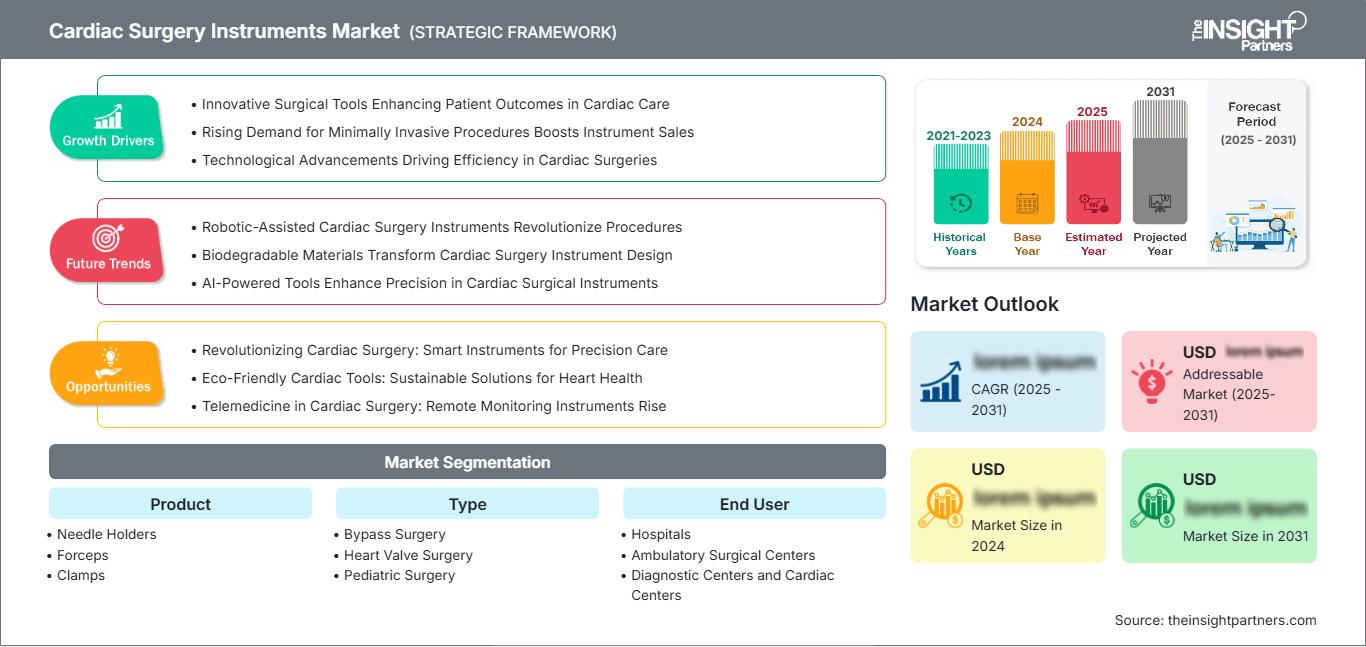
Cardiac Surgery Instruments Market: Strategic Insights
Regional Insights
North America Cardiac Surgery Instruments Market
North America captured 44–47% of global revenue in 2025 and is expected to achieve a 6.6–7.0% CAGR through 2034. Market share in Cardiac Surgery Instruments depends on a well-developed cardiothoracic infrastructure, complexity of procedures, and regular renewal of reusables. Academic medical centers also contribute in adopting new minimally invasive procedures using special needles, clamps, forceps and scissors.
Procurement is increasingly becoming regional with health-system-wide deals involving instrument acquisition, inspection, reprocessing and sterilization services. Cleanability, labeling and durability of material as part of FDA requirement for validation of reprocessing are among factors considered by the buyers. Canada is contributing through publicly funded cardiac surgery programs and hospitals procurement whereas Mexico represents expansion opportunities via private hospital construction and medical manufacturing facilities.
U.S. Cardiac Surgery Instruments Market
The US generated 86–89% of North American sales in 2025 and is projected to register a 6.7–7.1% CAGR during 2026–2034. Demands depend on the presence of high-volume cardiac centers, hospitals, and surgeons having expertise in both traditional and minimally invasive surgery. Becton, Dickinson and Company, Teleflex Incorporated, Scanlan International, Inc., and Wexler Surgical, Inc. have relevance in this market in terms of business or operation. Instrument usage differs across applications. Instruments for bypass operations need vessel handling and reliable clamps, those for valve surgery need fine dissection and suture instruments, while those used for pediatric surgeries need instruments with smaller size and atraumatic contact surfaces. Facilities are increasingly making sense of redundant trays and are using instrument level identification for better visibility on their utilization.
Europe Cardiac Surgery Instruments Market
Europe held 25–28% of global sales in 2025 and is forecast to expand at a 6.2–6.7% CAGR through 2034. Germany dominates the region’s demand due to the existence of hospital infrastructure, the presence of a medical technologies market and proven cardiac surgery expertise. B. Braun SE is the major supplier of surgical technologies in the region, and regulations promote recorded quality, traceability and lifecycle management.
The UK takes advantage of dedicated National Health Service centers for performing cardiac surgery, despite the intense scrutiny of costs related to procurement processes. France, Italy, and Spain provide recurring demand through cardiovascular programs and hospital renovation. France has a well-established valve surgery market, while Italy has famous cardiac specialties. Spain is developing minimally invasive techniques at leading hospitals. In the aforementioned countries, growing populations and legacy inventory replacements drive purchases, while budget constraints favor standard sets and repairable technologies.
APAC Cardiac Surgery Instruments Market
Asia Pacific accounted for 20–23% of revenue in 2025 and is projected to post an 8.2–8.8% CAGR through 2034. In regional sales, China takes the lead by way of hospital growth and local manufacturing capacity, while Japan continues to create demand for high-precision instruments. In India, there is considerable volume opportunity as the cardiac private network grows beyond large cities.
In South Korea, technology-based surgeries and training are supported, whereas in Australia, the procurement process is mature. There is increased adoption by way of policy-driven hospital investments, insurance coverage, medical tourism, and surgeon training. Local manufacture may drive lower costs, although specialist imported equipment remains relevant due to precision and durability.
Middle East & Africa Cardiac Surgery Instruments Market
The region is projected to register a 6.9–7.5% CAGR during 2026–2034. Saudi Arabia leads through hospital construction, specialist recruitment, and healthcare diversification, while the UAE is building advanced cardiac centers serving domestic and international patients. South Africa remains the principal sub-Saharan market, supported by established private hospitals and teaching institutions.
Across the Rest of MEA, limited specialist availability and capital constraints restrict adoption. Nevertheless, energy-funded infrastructure programs, public-private partnerships, and centralized procurement create targeted opportunities. Suppliers offering training, maintenance, and dependable distribution can address capability gaps more effectively than product-only vendors.
Segmentation Analysis
Product
The product segment is projected to expand at a 6.8–7.3% CAGR during 2026–2034. The Cardiac Surgery Instruments Market scope covers precision instruments selected according to tissue interaction, access route, surgeon preference, and reprocessing requirements. Replacement demand depends on wear, jaw alignment, cutting performance, corrosion, and changes in surgical technique. Manufacturers differentiate through metallurgy, working-tip geometry, balance, handle design, and procedure-specific configurations.
- Needle Holders: Demand is supported by coronary anastomosis, valve repair, and congenital surgery, where secure needle control and precise rotational movement are essential for consistent suturing in restricted operative fields.
- Forceps: Forceps maintain a central role in tissue handling and dissection. Atraumatic tips, fine profiles, and balanced spring tension are strategically important during microsurgical and minimally invasive cardiac procedures.
- Clamps: Clamps support vessel occlusion, graft preparation, and operative field control. Purchasing priorities include dependable locking, uniform pressure distribution, corrosion resistance, and configurations suited to delicate vascular anatomy.
- Scissors: Cardiac scissors are required for controlled dissection and tissue cutting. Curved patterns, fine blades, and reliable sharpness support procedural efficiency and reduce unintended traction around sensitive structures.
Type
The type segment is anticipated to register a 7.0–7.5% CAGR from 2026 to 2034. Instrument requirements vary considerably by procedural workflow, anatomical access, tissue sensitivity, and suturing complexity. Bypass surgery supports established recurring volumes, while valve and pediatric procedures stimulate demand for finer, specialized tools. Training programs and minimally invasive techniques are influencing pattern selection and tray composition.
- Bypass Surgery: Bypass procedures generate recurring demand for vessel dilators, clamps, forceps, scissors, and needle holders. Standardized graft preparation and anastomosis workflows make instrument reliability central to operating-room productivity.
- Heart Valve Surgery: Valve repair and replacement require precise tissue handling, exposure, cutting, and suturing. Growth is linked to aging populations and increased clinical emphasis on repair-oriented and minimally invasive techniques.
- Pediatric Surgery: Pediatric cardiac procedures require smaller, atraumatic instruments suited to delicate anatomy. Demand is concentrated in specialist centers where congenital expertise and customized instrument sets support complex interventions.
End User
The end-user segment is estimated to grow at a 7.1–7.6% CAGR during 2026–2034. Hospitals remain the primary purchasing channel because open-heart surgery requires intensive care, perfusion, diagnostics, and multidisciplinary teams. Ambulatory facilities are scaling selectively, while diagnostic and cardiac centers influence referrals and procedural planning. Procurement models increasingly combine instruments with maintenance, inventory control, and staff training.
- Hospitals: Hospitals dominate consumption because they manage complex bypass, valve, and pediatric procedures. Their purchasing scale favors complete trays, validated reprocessing instructions, maintenance services, and standardized multisite contracts.
- Ambulatory Surgical Centers: These facilities represent the fastest-growing end-user category as suitable cardiovascular procedures move toward outpatient settings. Adoption depends on reimbursement, patient selection, emergency protocols, and efficient sterile processing.
- Diagnostic Centers: Diagnostic centers contribute indirectly by identifying surgical candidates and coordinating referrals. Their strategic importance lies in accelerating care pathways, imaging-led planning, and communication with specialized cardiac surgery teams.
- Cardiac Centers: Dedicated cardiac centers require premium, procedure-specific instruments and maintain concentrated surgical volumes. Surgeon specialization, clinical training, and rapid replacement needs support direct relationships with manufacturers and distributors.
Opportunity Snapshot
| End User | Revenue Contribution | Trend Tag | Adoption Stage |
| Hospitals | High | Tray Standardization | Mature |
| Ambulatory Surgical Centers | Medium | Outpatient Migration | Scaling |
| Diagnostic Centers | Low | Referral Integration | Emerging |
| Cardiac Centers | High | Specialty Precision | Scaling |
Cardiac Surgery Instruments Market Growth Drivers and Impact Analysis
Expanding Burden of Surgically Treatable Cardiovascular Disease
Cardiovascular disease remains the leading cause of death globally, creating sustained pressure on health systems to expand prevention, intervention, and surgical treatment. Cardiovascular mortality has been calculated to be about 19.8 million cases by the World Health Organization in 2022, with 85% of those being from heart attacks and strokes. Whenever the blockage of the coronary artery, valve problems, or congenital problems of the heart cannot be controlled by medicines and catheterization, only surgical treatment becomes inevitable. Hence, there is an increased need for instruments in proportion to the number of surgical theaters for the heart, skilled surgeons, and intensive care facilities.
Transition Toward Minimally Invasive Cardiac Procedures
Small incisions and limited access means will result in unique needs for instruments. Instruments with long shafts, slender tips, small handles, articulated angles, and articulating mechanisms are necessary in manipulating the tissue without having the hands in direct contact. This shift will increase the importance of procedure-specific kits and offer a chance for differentiation among the specialist companies. This adoption has an economic impact on hospitals since minimally invasive programs will entail the joint investment in visualization, training, operation room processes, and the instruments. As more centers invest in such programs, companies that provide support in the process of demonstration, training, tray arrangement, and fast service will benefit.
Replacement and Standardization of Reusable Instrument Inventories
These tools will be constantly exposed to cleaning chemicals, mechanical stress, and heat treatment during sterilization process. Wear and tear may damage the sharpness of the blades, proper closure of the jaw, surface quality, and locking mechanism of the instruments. According to the FDA guidelines, reprocessing may not be properly conducted and may leave biological residue on the instrument and interfere with the sterilization procedure. This leads the hospitals to standardize the trays used in their procedures. Thus, there is an opportunity to sell durable instruments and associated services to hospitals.
Cardiac Surgery Instruments Market Future Trends
Digitally Traceable Instrument Lifecycles
Cardiac Surgery Instruments Market trends will increasingly include instrument-level identification connected with sterile-processing and operating-room systems. It is possible to track information about tray contents, usage rates, maintenance activities, sterilization cycles, and lost trays. Hospitals can use this information to find underused instruments, correct set inaccuracies, and plan preventive maintenance before performance declines. Instrument makers can incorporate permanent labeling, data systems, and maintenance programs into their product lines. Eventually, procurement may move away from frequent replacement cycles based on estimates of instrument age to evidence-based life cycle procurement based on use and condition.
Procedure-Specific Ergonomics and Micro-Instrumentation
The Cardiac Surgery Instruments Market Forecasts show that portfolio designs in the future will focus more on surgeon fatigue, geometry of access, and tissue interaction. The use of light materials, better grips, appropriate spring tensions, and specialized coatings will enhance the control in long surgeries. The need for small tips and specialized jaw designs will increase due to pediatric, valve repair, and minimal access surgeries. There will be more collaboration with surgeons during the design process and testing through simulations prior to launching the products in the market. Modular product line families may enable hospitals to customize their own sets based on preferences without duplicating too many of them.
Cardiac Surgery Instruments Market Opportunities
Localization of Specialist Supply in High-Growth Asian Markets
Manufacturers can invest in regional finishing, assembly, repair, and distribution capabilities in China, India, and Southeast Asia. Local operations can reduce lead times, import exposure, and replacement delays while improving responsiveness to hospital-specific tray requirements. Cardiac Surgery Instruments Market Forecasts support prioritizing metropolitan cardiac networks first, followed by expanding private hospitals in secondary cities. Partnerships with surgeon-training institutions can build product familiarity and provide structured feedback. Successful localization requires consistent metallurgy, validated processes, and quality controls equivalent to global standards. Companies should avoid competing solely on price and instead combine affordability with dependable servicing and documented durability.
Lifecycle Service Models for Multisite Hospital Networks
An opportunity exists to package instrument supply with inspection, sharpening, repair, tray rationalization, and utilization reporting. Multisite systems frequently manage inconsistent catalogs and duplicated sets, increasing sterile-processing workload and replacement expenditure. Suppliers can begin with instrument audits, identify redundant patterns, and establish standardized procedure trays across locations. Contractual service levels for turnaround time and emergency replacement can improve customer retention while creating recurring revenue. The model particularly suits manufacturers and distributors with field technicians, technical documentation, and logistics coverage. Demonstrating lower loss rates, fewer incomplete trays, and longer usable life can support value-based procurement discussions.
Recent Developments
- September 2025: B. Braun SE acquired True Digital Surgery, a developer of digital robotic-assisted three-dimensional surgical microscopy. The transaction brought the company’s technology team fully into B. Braun’s Aesculap surgical division and supports continued development of digital visualization capabilities. Although initially focused on microsurgical fields, the investment demonstrates B. Braun’s broader strategy of combining surgical instruments with advanced visualization and digital operating technologies.
- April 2025: Becton, Dickinson and Company launched the HemoSphere Alta advanced hemodynamic monitoring platform with artificial intelligence-led predictive algorithms. The system includes a Cerebral Autoregulation Index and Hypotension Prediction Index software intended to help clinicians anticipate blood-pressure instability during critical procedures. The launch expands BD’s connected perioperative portfolio following its acquisition of Edwards Lifesciences’ Critical Care product group.
- February 2025: Teleflex Incorporated announced an agreement to acquire substantially all of BIOTRONIK’s vascular intervention business while outlining plans to separate selected operations. The transaction strengthens Teleflex’s exposure to coronary and peripheral vascular treatment and broadens its engagement with cardiovascular clinicians. The strategic realignment also concentrates investment on high-acuity hospital markets, including interventional and surgical care environments.
Frequently Asked Questions

- Comprehensive Market Sizing and Forecast Analysis
- Detailed Segmentation Analysis
- In-Depth Market Dynamics Assessment
- Regional and Country-Level Insights
- Competitive Landscape and Company Benchmarking
- Strategic Business Intelligence
Recent Reports
Testimonials

The Insight Partners' SCADA System Market report is comprehensive, with valuable insights on current trends and future forecasts. The team was highly professional, responsive, and supportive throughout. We are very satisfied and highly recommend their services.
RAN KEDEM Partner, Reali Technologies LTDs
I requested a report on a very specific software market and the team produced the report in a few days. The information was very relevant and well presented. I then requested some changes and additions to the report. The team was again very responsive and I got the final report in less than a week.
JEAN-HERVE JENN Chairman, Future Analytica
We worked with The Insight Partners for an important market study and forecast. They gave us clear insights into opportunities and risks, which helped shape our plans. Their research was easy to use and based on solid data. It helped us make smart, confident decisions. We highly recommend them.
PIYUSH NAGPAL Sr. Vice President, High Beam Global
The Insight Partners delivered insightful, well-structured market research with strong domain expertise. Their team was professional and responsive throughout. The user-friendly website made accessing industry reports seamless. We highly recommend them for reliable, high-quality research services
YUKIHIKO ADACHI CEO, Deep Blue, LLC.
This is the first time I have purchased a market report from The Insight Partners.While I was unsure at first, I visited their web site and felt more comfortable to take the risk and purchase a market report.I am completely satisfied with the quality of the report and customer service. I had several questions and comments with the initial report, but after a couple of dialogs over email with their analyst I believe I have a report that I can use as input to our strategic planning process.Thank you so much for taking the extra time and making this a positive experience.I will definitely recommend your service to others and you will be my first call when we need further market data.
JOHN SUZUKI President and Chief Executive Officer, Board Director, BK Technologies
I wish to appreciate your support and the professionalism you displayed in the course of attending to my request for information regarding to infectious disease IVD market in Nigeria. I appreciate your patience, your guidance, and the fact that you were willing to offer a discount, which eventually made it possible for us to close a deal. I look forward to engaging The Insight Partners in the future, all thanks to the impression you have created in me as a result of this first encounter.
DR CHIJIOKE ONYIA MANAGING DIRECTOR, PineCrest Healthcare Ltd.Reason to Buy
- Informed Decision-Making
- Understanding Market Dynamics
- Competitive Analysis
- Identifying Emerging Markets
- Customer Insights
- Market Forecasts
- Risk Mitigation
- Boosting Operational Efficiency
- Strategic Planning
- Investment Justification
- Tracking Industry Innovations
- Aligning with Regulatory Trends





 Get Free Sample for