
Plastic Fillers Market Demand, Share & Growth by 2034
Coverage: by Type (Inorganics, Organics); Physical Form (Continuous, Discontinuous, Nano-Fillers) , and Geography (North America, Europe, Asia Pacific, and South and Central America)
- Status : Data Released
- Report Code : TIPRE00010382
- Category : Chemicals and Materials
- No. of Pages : 150
- Available Report Formats :


- Last update date : July 15, 2026


2025 Market Size
US$ 10.91 Bn
Base year value
2034 Forecast
US$ 17.89 Bn
Projected by 2034
CAGR 2026-2034
5.65 %
Growth rate
Addressable Market
US$ 130.55 Bn
(2026-2034)
The plastic fillers market was valued at US$ 10.91 Billion in 2025 and is projected to reach US$ 17.89 Billion by 2034, expanding at a CAGR of 5.65% during 2026–2034. Plastic fillers are widely incorporated into polymer formulations to improve mechanical performance, dimensional stability, thermal resistance, and cost efficiency. Growing demand for lightweight materials across automotive, packaging, and construction sectors continues to support market expansion, while advances in filler engineering are enabling higher-value applications in performance plastics.
North America remains a significant contributor to the market and is anticipated to expand at an estimated CAGR of around 5.2% throughout the Plastic Fillers market forecast period. The region benefits from a mature plastics processing industry, increasing adoption of lightweight automotive components, and strong investments in sustainable packaging technologies. Rising demand for engineered compounds with enhanced durability and regulatory emphasis on material efficiency are further supporting the use of advanced filler systems across industrial applications.
Plastic Fillers Market Assessment and Insights
- North America: North America accounted for 30–34% market share in 2025 and is projected to expand at a CAGR of 5.0%–5.6% during 2026–2034. Growth is driven by increasing automotive lightweighting initiatives, expanding use of engineered plastics, and continued advancements in manufacturing technologies across the region.
- U.S.: The U.S. represented 81–85% of the North American market in 2025 and is anticipated to register a CAGR of 5.1%–5.7% during 2026–2034, supported by strong demand for lightweight polymer materials, advanced manufacturing capabilities, and growing adoption of engineered plastics across key industries.
- Europe: Europe held 26–30% market share in 2025 and is expected to grow at a CAGR of 4.8%–5.4% during 2026–2034. Germany, France, and Italy remain the leading regional markets, supported by robust automotive production, construction activities, and increasing use of industrial plastics.
- Asia Pacific: Asia Pacific accounted for 31–35% market share in 2025 and is forecast to expand at a CAGR of 6.2%–6.8% during 2026–2034. China, India, and Japan drive regional growth through expanding plastics processing, industrial manufacturing, and increasing demand for high-performance polymer materials.
- Largest Segment – Building and Construction: The building and construction segment represented the largest market segment and is expected to grow at a CAGR of 5.8%–6.4% during 2026–2034, driven by increasing demand for durable, lightweight, and high-performance polymer-based construction materials.
- High Growth Segment – Nano-Fillers: The nano-fillers segment is projected to register the fastest growth with a CAGR of 6.8%–7.4% during 2026–2034, supported by rising adoption in high-performance composites and advanced engineering plastics.
- Key companies analyzed in detail: Imerys S.A.; Omya AG; Minerals Technologies Inc.; LKAB Minerals AB; Quarzwerke GmbH; Hoffmann Mineral GmbH; GCR Group; Kärntner Montanindustrie GmbH; NYCO Minerals Inc.; Covia Holdings LLC.
Source: The Insight Partners' analysis based on proprietary research, government publications, company annual reports, investor presentations, industry databases, and expert interviews.
The plastic fillers market has evolved from a cost-reduction-focused industry into a technologically driven materials segment supporting advanced polymer applications. Manufacturers increasingly utilize fillers to enhance stiffness, flame resistance, dimensional stability, barrier performance, and processing efficiency. As end-use industries pursue lightweight, durable, and sustainable materials, fillers have become critical functional additives rather than simple extenders.
Future market development is expected to be shaped by innovations in nano-fillers, hybrid filler technologies, and customized polymer compounds designed for specific industrial requirements. The growing emphasis on circular economy initiatives, material optimization, and high-performance engineering plastics is encouraging suppliers to invest in advanced formulations. These developments are creating opportunities for companies to differentiate through performance enhancement rather than solely competing on price.
Plastic Fillers Market Report Scope
| Report Attribute | Details |
|---|---|
| Market size in 2025 | US$ 10.91 Billion |
| Market Size by 2034 | US$ 17.89 Billion |
| Global CAGR (2026 - 2034) | 5.65% |
| Historical Data | 2021-2024 |
| Forecast period | 2026-2034 |
Plastic Fillers Market Analysis
Growing industrial demand for polymer materials with improved mechanical and thermal characteristics continues to drive the plastic fillers market. Fillers such as calcium carbonate, talc, silica, alumina trihydrate, and carbon-based materials help manufacturers improve product functionality while optimizing material costs. Automotive manufacturers increasingly incorporate filled plastics into interior and exterior components to reduce vehicle weight and improve fuel efficiency. Similar demand trends are visible in packaging, electronics, and construction industries.
The market ecosystem includes mineral extraction companies, specialty filler producers, compounders, resin manufacturers, plastics processors, and end-use industries. Companies such as GCR Group, Omya AG, Imerys S.A., Minerals Technologies Inc., and Quarzwerke Group maintain strong positions through vertically integrated operations, extensive product portfolios, and technical support capabilities that enable customized filler solutions.
Competition is increasingly centered on product performance, sustainability, and application-specific innovation. Leading suppliers are developing surface-treated fillers, nano-engineered materials, and multifunctional additives capable of improving multiple polymer properties simultaneously. Such developments are helping manufacturers address evolving performance standards in automotive, electronics, and infrastructure applications.
Investment activity within the market is focused on capacity expansion, mineral processing technologies, and sustainable material development, reinforcing long-term Plastic Fillers market size expansion. Strategic collaborations between filler producers and polymer compounders are becoming more common as customers seek optimized formulations. Companies are also expanding regional manufacturing footprints to strengthen supply chain resilience and meet growing demand from emerging industrial markets.
● REPORT CUSTOMIZATION
Tailor This Report To Align With Your Specific Business Requirements
This report can be customized to align precisely with your business objectives, scope, and target markets. Customization options include tailored segmentation, geography, competitive analysis, and strategic insights to support informed decision-making.
Customize This Report →WHAT YOU CAN ADJUST
- ● Segmentations
- ● Geography
- ● Competitive Analysis
- ● Language Preferences
Plastic Fillers Market: Strategic Insights
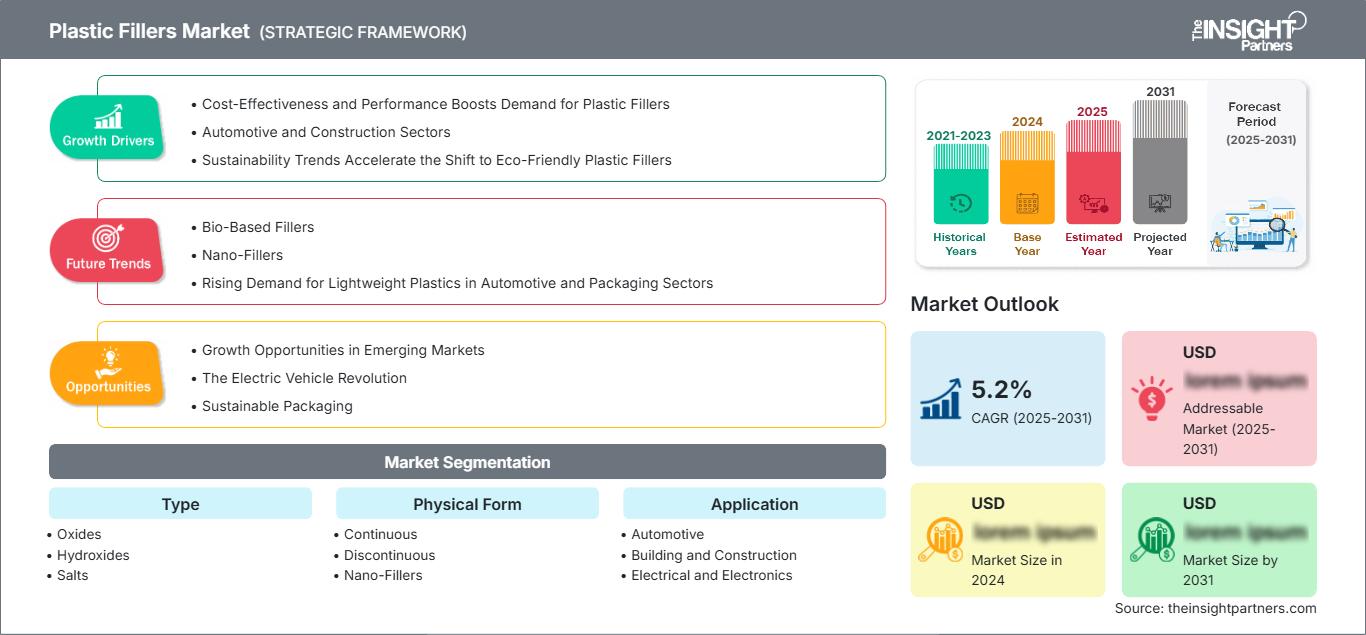
Regional Insights
North America Plastic Fillers Market
North America represents a technologically advanced market supported by strong demand from automotive, packaging, construction, and electrical sectors. The region is projected to expand at an estimated CAGR of approximately 5.2% through 2034. Increasing emphasis on lightweight materials and high-performance polymers continues to accelerate the integration of specialized fillers into engineering plastic formulations.
Manufacturers across the United States and Canada are increasingly adopting mineral and nano-fillers to improve product performance while maintaining cost competitiveness. Growing investments in sustainable packaging materials, electric vehicle production, and infrastructure modernization projects are creating favorable conditions for long-term market expansion. Regulatory focus on material efficiency further supports innovation in filler-enhanced polymer compounds.
U.S. Plastic Fillers Market
The United States accounts for approximately 75–80% of the North American plastic fillers market, supported by its extensive plastics manufacturing ecosystem and advanced industrial base. The market is expected to grow at a CAGR of around 5.1% during the forecast period. Strong demand from automotive, consumer goods, packaging, and construction industries continues to drive filler consumption across diverse polymer applications.
Major industry participants including Minerals Technologies Inc., Imerys S.A., and regional compounders maintain substantial operational presence in the country. Increasing adoption of engineered plastics in electric vehicles, consumer electronics, and industrial equipment is encouraging the use of advanced filler technologies. Demand is also being supported by the growing need for sustainable packaging solutions that balance performance requirements with material efficiency objectives.
Europe Plastic Fillers Market
Europe accounts for an estimated 25–30% Plastic Fillers market share and is expected to grow at a CAGR of approximately 4.9% through 2034. The region benefits from a sophisticated manufacturing sector, strong automotive production capabilities, and increasing adoption of sustainable materials. Regulatory initiatives promoting resource efficiency and circular economy principles continue to influence material selection strategies across industries.
The United Kingdom demonstrates steady demand for plastic fillers through its packaging, construction, and consumer goods industries. Investments in sustainable packaging development and advanced polymer applications are supporting market growth. Manufacturers increasingly utilize functional fillers to improve performance characteristics while addressing environmental objectives and evolving product standards.
Germany remains the leading country within the European market due to its strong automotive, machinery, and industrial manufacturing sectors. Demand for lightweight materials and engineering plastics continues to support filler consumption. Advanced research capabilities and strong collaboration between material suppliers and industrial manufacturers further strengthen the country’s market position.
France, Italy, and Spain collectively contribute significant demand through packaging, infrastructure, automotive, and consumer product industries. Growing emphasis on recyclable materials and energy-efficient manufacturing practices is encouraging broader adoption of advanced fillers. Regional producers are increasingly investing in specialized formulations that address application-specific performance requirements.
APAC Plastic Fillers Market
Asia Pacific holds the largest share of the plastic fillers market, accounting for approximately 40–45% of global demand, and is projected to record the fastest growth with a CAGR exceeding 6.5% through 2034. Rapid industrialization, expanding manufacturing activities, and increasing consumption of plastic products continue to drive market expansion. The region benefits from strong production capacities and growing investments in polymer processing infrastructure.
China remains the dominant market due to its extensive plastics manufacturing base, large-scale industrial production, and strong domestic demand. Government support for advanced manufacturing and electric vehicle production is contributing to increased utilization of filler-enhanced polymer materials. Continuous capacity expansions across plastics processing industries further strengthen market growth prospects.
Japan and South Korea maintain strong demand for high-performance fillers used in electronics, automotive components, and advanced industrial applications. Meanwhile, India is emerging as a key growth engine supported by infrastructure development, packaging demand, and expanding automotive production. Australia contributes through construction, mining-related applications, and specialty plastics manufacturing, supporting broader regional market development.
Middle East & Africa Plastic Fillers Market
The Middle East & Africa plastic fillers market is witnessing gradual expansion driven by infrastructure development, industrial diversification initiatives, and growing plastics manufacturing activities. The region is expected to register a CAGR of approximately 5.4% during the forecast period. Investments in downstream petrochemical industries are creating favorable conditions for increased consumption of filler-enhanced plastic products.
Saudi Arabia leads the regional market due to its substantial petrochemical sector, industrial development programs, and investments in manufacturing diversification. Growing demand for construction materials, packaging products, and industrial plastics is supporting market growth. The country’s expanding polymer production ecosystem continues to create opportunities for filler suppliers and compounders.
The United Arab Emirates benefits from strong construction activity and increasing industrial investments, while South Africa remains an important market supported by packaging, mining, and infrastructure sectors. Other countries across the region are gradually increasing consumption of advanced polymer materials as industrialization progresses. Continued investment in infrastructure and manufacturing capabilities is expected to strengthen long-term market demand.Top of Form
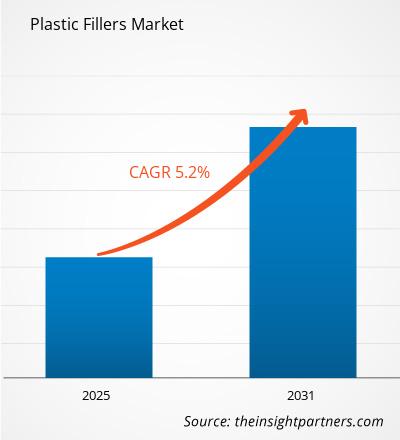
Segmentation Analysis
Type
- Oxides: Oxide fillers are utilized to improve thermal stability, electrical insulation, and mechanical strength in plastic compounds. Their growing use in electrical and electronics applications supports demand for high-performance polymer formulations.
- Hydroxides: Hydroxide fillers are widely adopted for flame-retardant applications due to their ability to release water during decomposition. Demand is increasing in construction materials and electrical components requiring enhanced fire safety performance.
- Salts: Salt-based fillers contribute to dimensional stability, rigidity, and cost optimization in plastic products. Their usage is expanding across packaging and industrial applications where balanced performance and affordability are important.
- Silicates: Silicates represent the leading segment owing to their broad availability, cost efficiency, and ability to enhance stiffness, heat resistance, and durability. Talc and related silicates remain widely used across automotive and construction sectors.
- Metals: Metal fillers provide conductivity, electromagnetic shielding, and improved mechanical properties. Growing demand from electronics, specialty industrial products, and advanced engineering applications supports segment growth.
- Carbon: Carbon fillers enhance strength, conductivity, wear resistance, and lightweight performance. Their increasing integration into automotive, electronics, and high-performance industrial plastics continues to drive market expansion.
- Natural Polymer: Natural polymer fillers are gaining attention due to sustainability objectives and increasing interest in bio-based materials. They support lightweight designs while improving environmental profiles of plastic products.
Physical Form
- Continuous: Continuous fillers provide enhanced structural reinforcement and are primarily used in applications requiring superior mechanical strength and durability. Demand remains strong in industrial and specialized engineering plastics.
- Discontinuous: Discontinuous fillers account for substantial market usage due to ease of processing, cost-effectiveness, and compatibility with various polymers. They are extensively used in packaging, automotive, and construction applications.
- Nano-Fillers: Nano-fillers represent the fastest-evolving segment as manufacturers seek significant performance improvements at low loading levels. Their ability to enhance barrier properties, conductivity, and strength is supporting adoption in advanced applications.
Application
- Automotive: Automotive manufacturers utilize plastic fillers to reduce weight, improve fuel efficiency, and enhance component durability. Demand is increasing with the growth of electric vehicles and lightweight transportation solutions.
- Building and Construction: Construction applications rely on filled plastics for pipes, insulation, panels, and structural components. Urbanization and infrastructure investments continue to generate substantial demand for durable polymer materials.
- Electrical and Electronics: Fillers improve electrical insulation, flame resistance, thermal management, and dimensional stability in electronic products. Expanding electronics production and digitalization trends support long-term growth.
- Packaging: Packaging remains a major application area due to the need for cost optimization, stiffness enhancement, and material efficiency. Demand is strengthened by rising consumption of food, consumer goods, and e-commerce packaging.
Opportunity Snapshot
| Application | Revenue Contribution | Trend Tag | Adoption Stage |
| Automotive | High | Lightweighting | Mature |
| Building and Construction | High | Infrastructure | Mature |
| Electrical and Electronics | Medium | Miniaturization | Scaling |
| Packaging | High | Material Efficiency | Mature |
Plastic Fillers Market Growth Drivers and Impact Analysis
Growing Demand for Lightweight Materials Across Transportation Industries
The increasing focus on vehicle lightweighting has become one of the most influential drivers of the plastic fillers market. Automotive manufacturers are continuously seeking materials that reduce vehicle mass without compromising safety, durability, or performance. Filled plastics provide a practical solution by enabling the replacement of heavier metal components with engineered polymer alternatives. Silicates, carbon fillers, and specialized mineral fillers are increasingly incorporated into automotive interiors, exterior panels, under-the-hood components, and electric vehicle systems.
The shift toward electric mobility further strengthens demand because lightweight materials directly contribute to battery efficiency and driving range. Plastic fillers allow manufacturers to optimize mechanical properties while maintaining production cost efficiency. Beyond passenger vehicles, commercial transportation, aerospace, and rail industries are also exploring advanced polymer composites. This broad adoption creates sustained demand throughout the value chain, encouraging investments in filler innovation, polymer compounding technologies, and application-specific material development.
Expansion of Construction and Infrastructure Development Activities
Large-scale urbanization and infrastructure investments worldwide continue to support the consumption of filled plastic products. Construction materials increasingly incorporate plastic fillers to improve rigidity, dimensional stability, weather resistance, and overall performance. Applications such as pipes, fittings, insulation materials, roofing systems, wall panels, and structural components rely on fillers to achieve required specifications while maintaining economic viability.
Developing economies in Asia Pacific, the Middle East, and parts of Africa are investing heavily in transportation networks, housing projects, industrial facilities, and utility infrastructure. These projects generate substantial demand for durable polymer-based materials. At the same time, developed regions are upgrading aging infrastructure and emphasizing energy-efficient construction practices. The resulting demand supports both commodity and specialty filler markets. Suppliers capable of delivering performance-enhancing formulations that meet regulatory standards are expected to benefit from expanding opportunities across construction-related value chains.
Increasing Adoption of High-Performance and Functional Plastics
Industries are increasingly demanding plastics that deliver advanced functionality beyond traditional performance requirements. Fillers are playing a critical role in enabling these capabilities by enhancing thermal conductivity, flame retardancy, barrier performance, electrical properties, and mechanical strength. Electronics manufacturers, industrial equipment producers, and consumer product companies are actively incorporating specialized filler technologies into their product designs.
With the increasing complexity of products, there is a need for materials that can withstand all regulations, operations, and environmental conditions. The use of nano-fillers and surface-modified fillers has emerged as an efficient tool, as they can enhance material performance without requiring more of the material. This has promoted cooperation among the producers, compounding units, and consumers. With changing performance demands, the market is likely to see continuous innovation in specialized fillers.
Plastic Fillers Market Future Trends
Rapid Development of Nano-Filler Technologies
Nano-fillers are expected to become increasingly important as manufacturers seek higher levels of performance from polymer materials. Unlike conventional fillers, nano-scale materials can deliver significant improvements in mechanical strength, thermal stability, conductivity, and barrier properties at relatively low concentrations. This enables manufacturers to enhance product performance without substantially increasing weight or altering processing characteristics.
With increased focus on nanotechnology by research organizations, there are many opportunities to develop more advanced fillers to meet the emerging demands of the automotive, electronics, medical, and other industries. With the maturation of manufacturing technologies and a reduction in cost levels, the commercial success of these fillers is likely to increase. Filler suppliers that can develop scalable nano-filler systems and successfully integrate them with polymers will gain a competitive advantage. Over the long term, nano-fillers may change the nature of fillers from passive to active components.
Rising Focus on Sustainable and Bio-Based Filler Solutions
Sustainability is playing an increasingly important role in the selection of materials. Manufacturers are searching for ways to minimize their environmental footprint while retaining product performance and being competitive. This trend is driving demand for natural polymer fillers, recycled mineral fillers, and other sustainable solutions aligned with circular economy goals.
There are growing concerns among governments, regulators, and consumers regarding the issue of sustainable material consumption and efficient recycling processes. As a result, the producers of fillers are now working on ensuring sustainable sourcing, low carbon footprint and recycling processes. Future growth is likely to be more favorable to those suppliers who are able to provide performance combined with environmental sustainability.
Plastic Fillers Market Opportunities
Expansion of Electric Vehicle Supply Chains
The rapid growth of the electric vehicle production industry offers a huge potential for plastic filler producers. Electric vehicles need materials that are light-weighted and contribute to energy efficiency while complying with high safety standards. Filled plastics are applied more in battery casings, interior components, electrical parts, and other areas of application that require performance enhancement.
Manufacturers developing advanced filler technologies for thermal management, flame retardancy, and structural reinforcement are particularly well positioned to capitalize on this trend. Collaborations with automakers and polymer compounders could lead to sustainable business relationships. With global production of electric vehicles rising, there will be significant opportunities for players in the market for specialized fillers that can support future mobility needs.
Emerging Demand for Advanced Electronics and Smart Devices
Emerging Plastic Fillers market trends indicate that the expansion of consumer electronics, industrial automation systems, telecommunications equipment, and smart devices is creating new opportunities for high-performance filler materials. Electronic applications increasingly require plastics with superior thermal management, electrical insulation, dimensional stability, and electromagnetic shielding characteristics. Fillers play a crucial role in achieving these performance objectives.
The continuous implementation of connectivity solutions, sophisticated semiconductor solutions, and new-age communication technology is anticipated to drive demand for specific compounds. Manufacturers who focus on providing conductive fillers, nanotechnology products, and minerals-based advanced solutions will be able to meet the needs arising in rapidly changing electronics industries. This provides potential for the plastic filler market in both developed and developing countries, thus making electronics an increasingly significant business area in the coming years.
Recent Developments
- January, 2026: Safic-Alcan and Imerys extended their distribution partnership for mineral fillers serving the plastics and rubber industries in Turkey. Under the expanded agreement, Safic-Alcan will distribute Imerys’ portfolio of mineral fillers, including kaolin, talc, carbonates, mica, diatomite, perlite, and wollastonite. The collaboration strengthens market access to performance-enhancing fillers widely used in plastic compounding and masterbatch applications.
- April, 2026: Omya announced the launch of Omyaloop™, a new portfolio of recycled calcium carbonate materials designed to support circular plastics and sustainable compounding applications. The product range incorporates recycled mineral resources and is intended for use in plastic formulations where fillers are used to improve performance and reduce material costs. The launch strengthens Omya's sustainable mineral solutions portfolio for plastics, packaging, and consumer goods applications.
- November, 2025: Nuoxin New Materials launched its upgraded PP Filler Masterbatch Series (PP-2/3/4/5) based on high-hardness calcium carbonate technology. The new filler masterbatch series is designed for both direct injection molding and conventional filler applications, offering improved durability, processing flexibility, and material cost efficiency. The launch expands the company’s portfolio of plastic filler solutions for packaging and consumer goods manufacturing.
Frequently Asked Questions

- Comprehensive Market Sizing and Forecast Analysis
- Detailed Segmentation Analysis
- In-Depth Market Dynamics Assessment
- Regional and Country-Level Insights
- Competitive Landscape and Company Benchmarking
- Strategic Business Intelligence
Recent Reports
Testimonials

The Insight Partners' SCADA System Market report is comprehensive, with valuable insights on current trends and future forecasts. The team was highly professional, responsive, and supportive throughout. We are very satisfied and highly recommend their services.
RAN KEDEM Partner, Reali Technologies LTDs
I requested a report on a very specific software market and the team produced the report in a few days. The information was very relevant and well presented. I then requested some changes and additions to the report. The team was again very responsive and I got the final report in less than a week.
JEAN-HERVE JENN Chairman, Future Analytica
We worked with The Insight Partners for an important market study and forecast. They gave us clear insights into opportunities and risks, which helped shape our plans. Their research was easy to use and based on solid data. It helped us make smart, confident decisions. We highly recommend them.
PIYUSH NAGPAL Sr. Vice President, High Beam Global
The Insight Partners delivered insightful, well-structured market research with strong domain expertise. Their team was professional and responsive throughout. The user-friendly website made accessing industry reports seamless. We highly recommend them for reliable, high-quality research services
YUKIHIKO ADACHI CEO, Deep Blue, LLC.
This is the first time I have purchased a market report from The Insight Partners.While I was unsure at first, I visited their web site and felt more comfortable to take the risk and purchase a market report.I am completely satisfied with the quality of the report and customer service. I had several questions and comments with the initial report, but after a couple of dialogs over email with their analyst I believe I have a report that I can use as input to our strategic planning process.Thank you so much for taking the extra time and making this a positive experience.I will definitely recommend your service to others and you will be my first call when we need further market data.
JOHN SUZUKI President and Chief Executive Officer, Board Director, BK Technologies
I wish to appreciate your support and the professionalism you displayed in the course of attending to my request for information regarding to infectious disease IVD market in Nigeria. I appreciate your patience, your guidance, and the fact that you were willing to offer a discount, which eventually made it possible for us to close a deal. I look forward to engaging The Insight Partners in the future, all thanks to the impression you have created in me as a result of this first encounter.
DR CHIJIOKE ONYIA MANAGING DIRECTOR, PineCrest Healthcare Ltd.Reason to Buy
- Informed Decision-Making
- Understanding Market Dynamics
- Competitive Analysis
- Identifying Emerging Markets
- Customer Insights
- Market Forecasts
- Risk Mitigation
- Boosting Operational Efficiency
- Strategic Planning
- Investment Justification
- Tracking Industry Innovations
- Aligning with Regulatory Trends





 Get Free Sample for